






- May 17, 2026
Economic Hardship, Divided Politics, Fading Trust: Britain’s Political Instability Crisis Deepens
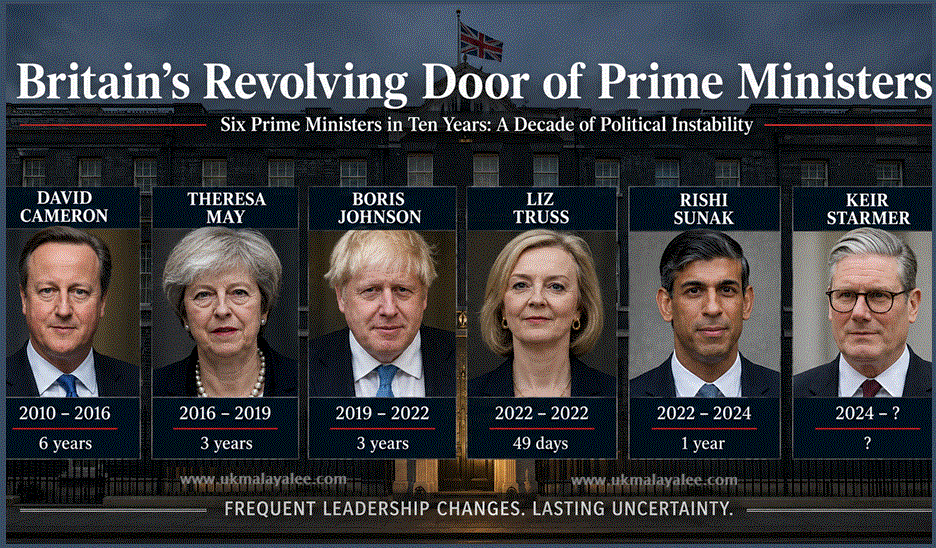
LONDON May 17: For much of modern history, Britain was seen as a model of political stability. Leaders often remained in office for years, guiding the country through periods of change with relative continuity. Yet over the past decade, that image has dramatically faded. Britain has cycled through a succession of prime ministers at an unprecedented pace, raising serious questions about whether the country’s political system can still provide stable government.
In just ten years, Britain has had a remarkable number of leaders, from David Cameron to Theresa May, Boris Johnson, Liz Truss, Rishi Sunak, and now Keir Starmer facing growing pressure within his own party. The rapid turnover has left many citizens frustrated, uncertain, and increasingly distrustful of politics.
At the heart of this crisis lies a series of overlapping economic and political shocks. The 2008 global financial crash severely damaged Britain’s economy and confidence. Since then, wage growth has stagnated for many households, public services have struggled under financial pressure, and living costs have risen sharply. Brexit added further strain, creating political division and economic uncertainty, while the COVID-19 pandemic and the war in Ukraine intensified inflation and economic instability.
These crises have made governing Britain increasingly difficult. Successive prime ministers have struggled to offer convincing solutions, and public patience has worn thin. Political scientist Ben Ansell argues that modern leaders are expected not only to manage crises but also to explain clearly how they intend to improve people’s lives. Many recent prime ministers, however, have failed to communicate a compelling vision for the country.
The Conservative governments that dominated British politics after 2010 each encountered major setbacks. David Cameron’s austerity policies promised economic recovery but failed to deliver strong long-term growth. Theresa May became trapped by Brexit negotiations and lost authority after failing to secure parliamentary support for her plans. Boris Johnson initially gained popularity through his energetic style and promises to “get Brexit done,” but scandals eventually destroyed trust in his leadership. Liz Truss’s brief premiership ended in chaos after her unfunded tax-cutting plans caused turmoil in financial markets. Rishi Sunak inherited a deeply divided party and a fatigued electorate, making electoral defeat difficult to avoid.
Now Keir Starmer’s Labour government faces its own problems despite winning a large parliamentary majority in 2024. Critics argue that Starmer has struggled to define a clear political identity or inspire confidence among voters. While some improvements have been made, including progress within the National Health Service and better relations with European allies, many voters remain unconvinced that the government has a strong direction or vision for Britain’s future.
Another major factor behind the instability is the changing nature of Britain’s political system. For decades, British politics was dominated by two parties: Labour and the Conservatives. Today, that dominance has weakened. Smaller parties such as the Liberal Democrats, Greens, Reform UK, and nationalist parties in Scotland and Wales have fragmented the vote. Britain’s first-past-the-post electoral system, designed largely for two-party competition, now struggles to reflect this more divided political landscape.
As a result, governments can win large parliamentary majorities with only a modest share of the popular vote. Labour, for example, secured a commanding majority in parliament in 2024 despite winning only around a third of total votes cast. This creates questions about legitimacy and leaves governments vulnerable to rapid declines in public support.
Public trust in politicians has also deteriorated sharply. Polling over recent decades shows growing dissatisfaction not only with governments but with prime ministers personally. Voters appear less willing to tolerate mistakes, scandals, or economic hardship than in previous generations. Replacing a prime minister, once seen as a way to restore public confidence, now rarely changes broader dissatisfaction with the governing party itself.
The result is a political culture where prime ministers resemble football managers: heavily scrutinized, quickly blamed, and easily replaced. Leadership changes that once happened after major national crises now occur with increasing regularity.
Despite these challenges, many analysts reject the idea that Britain is fundamentally ungovernable. Instead, they argue the country is experiencing the cumulative effects of economic decline, political fragmentation, weakened public trust, and repeated leadership failures. Britain’s institutions remain intact, but the pressure on its leaders has become more intense than at any time in recent memory.
Whether future prime ministers can restore stability will depend not only on economic recovery but also on their ability to rebuild trust, present a convincing national vision, and adapt Britain’s political system to a more fragmented and demanding electorate. Until then, the cycle of short-lived leaders and political uncertainty may continue.