






- April 10, 2026
Challenges Faced by Migrant Students Entering UK School System (KS1–A-Levels)
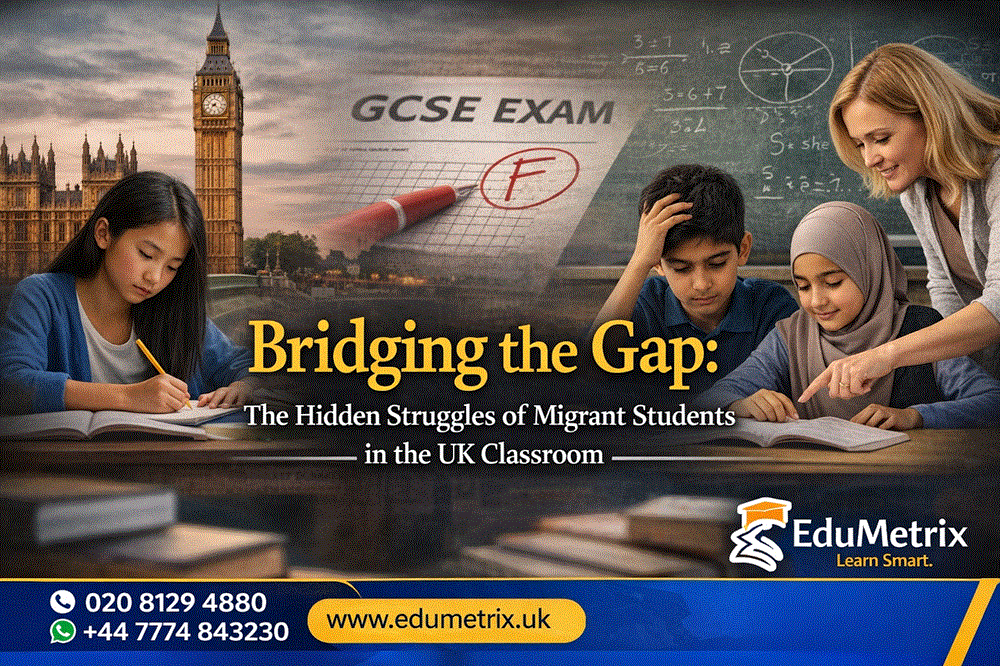
LONDON April 10: UK’s education system is structured into stages — KS1, KS2, KS3, GCSEs, and A-Levels — each designed with specific academic expectations and progression pathways. For students who begin their education in another country and later transition into this system, the experience can be both an opportunity and a challenge. Adjusting to a new syllabus, teaching style, and assessment method requires not only academic ability but also time and support.
Curriculum Gaps and Misalignment
One of the most common difficulties migrant students face is the mismatch between their previous curriculum and the UK syllabus. A student entering KS3 or GCSE level may discover that certain foundational topics—especially in subjects like mathematics and science—have already been covered by their peers. At the same time, they may have studied different material that does not directly align with the UK curriculum. This creates a situation where students must simultaneously catch up on missed content while adapting to new topics.
Shifting Learning Approaches
Many education systems around the world emphasize memorization and structured responses, whereas the UK system increasingly values analytical thinking, problem-solving, and independent learning. This shift becomes particularly evident at GCSE and A-Level stages, where students are expected to interpret questions, evaluate arguments, and present well-structured written answers. Even academically strong students can initially struggle with this transition because it requires a different way of thinking rather than simply more effort.
Exam Technique and Assessment Pressure
Success in GCSEs and A-Levels depends not only on subject knowledge but also on understanding how exams are structured. Migrant students often need time to learn exam techniques such as time management, interpreting mark schemes, and structuring responses effectively. Without this familiarity, students may underperform despite having a good grasp of the subject matter.
Placement and Time Constraints
Students are typically placed into year groups based on age rather than prior academic preparation. This can be particularly challenging for those entering KS4 (GCSE) or A-Level stages without having gone through earlier key stages in the UK. With limited time before major examinations, students face the pressure of bridging years of learning gaps within a short period.
Subject-Specific Challenges
Certain subjects highlight the transition difficulties more clearly:
English requires not just language proficiency but also skills in essay writing and literary analysis.
Humanities subjects often include UK-specific content unfamiliar to new students.
STEM subjects may differ in terminology, methods, and sequencing of topics.
These gaps can accumulate, making it harder for students to keep pace with their peers.
The Role of Support Systems
While schools provide general support, many migrant students benefit from additional guidance that specifically addresses the transition between different educational systems. Access to structured resources, mentoring, and clear explanations of the UK curriculum can make a significant difference in how quickly students adapt.
In recent years, platforms such as Edumetrix have emerged as useful supplementary resources for students navigating this shift. Rather than replacing formal schooling, they focus on helping learners understand how subjects are taught and assessed within the UK system. Resources that break down GCSE and A-Level expectations, along with guidance on exam techniques, can help students bridge the gap between prior knowledge and current requirements.
For families and students seeking a clearer understanding of how the UK curriculum works, resources like those available at EduMetrix UK offer structured insights into subjects, exam formats, and study approaches. Access to such guidance—especially when it is freely available—can ease the transition and build confidence in students who are still adjusting.
Conclusion
Transitioning into the UK education system from another country involves more than adapting to new subjects—it requires understanding a new way of learning, thinking, and being assessed. Migrant students often face compressed timelines and significant academic adjustments, particularly at GCSE and A-Level stages. With the right support—both within schools and through accessible external resources—they can overcome these challenges and succeed. Creating awareness of such support systems is an important step toward ensuring that every student, regardless of their educational background, has the opportunity to thrive.