






- October 22, 2026
Nursing students graduating with higher average student debt than medical graduates in England
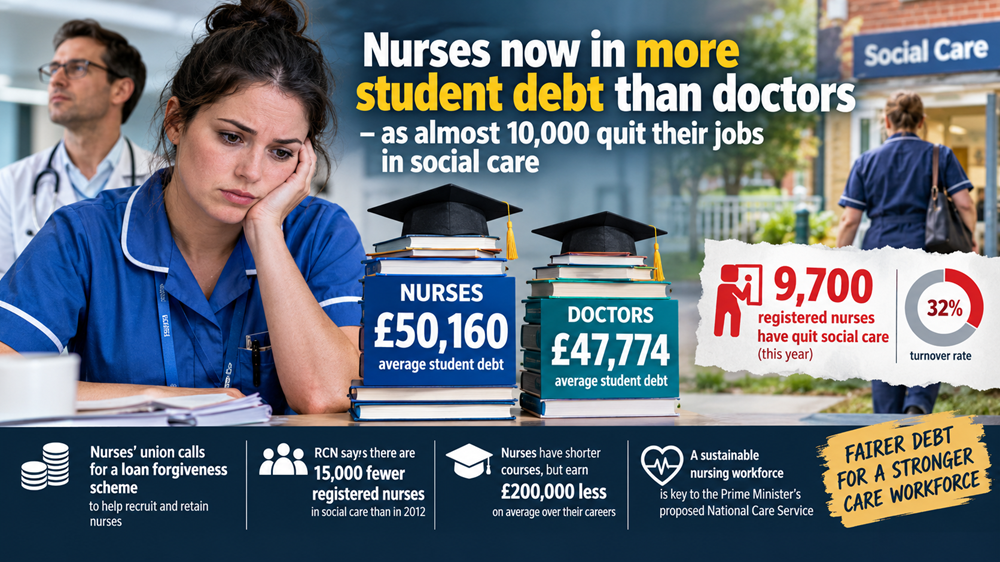
LONDON Oct 22: Nursing students in England are graduating with higher average student debt than medical graduates, raising concerns about the financial challenges facing those considering a career in nursing. The issue comes amid a significant loss of registered nurses from social care, highlighting the need to make the profession more attractive and sustainable for future generations.
According to Freedom of Information requests submitted by the Royal College of Nursing (RCN) to the Student Loans Company, nursing graduates owe an average of £50,160, compared with £47,774 for medical graduates. The RCN says nurses face this higher debt despite generally shorter university courses and lower average lifetime earnings. The union is calling for a student loan forgiveness scheme to encourage more people to enter nursing and help retain experienced staff in the NHS and social care.
Financial challenges for nursing students
For prospective nurses, the cost of university education is an important consideration. Nursing students generally rely on student loans to cover tuition fees and living expenses, while NHS bursaries cover tuition fees for the final two years of a typical six-year medical degree. Students from lower-income households may face additional financial pressure because they have less access to family support. Many depend on maintenance loans to cover accommodation, food, travel and other essential costs while studying. The RCN argues that these financial pressures can discourage potential applicants from pursuing nursing and leave graduates managing substantial debt as they begin their careers.
Staff shortages in social care
The financial concerns come as social care faces difficulties recruiting and retaining registered nurses. Data cited by the RCN indicates that 32% of registered nurses working in the sector left their jobs during the year covered by the figures, equivalent to approximately 9,700 departures. The union also reports that England has around 15,000 fewer registered nurses in social care than in 2012. It is unclear how many nurses who left their jobs moved elsewhere in healthcare and how many left the profession entirely.
RCN General Secretary Professor Nicola Ranger said the sector needed a stable, nurse-led workforce to meet the needs of an ageing population and people living with increasingly complex health conditions. She argued that reducing student debt could help attract new nurses, retain existing staff and strengthen services across both the NHS and social care.
Proposed student loan forgiveness scheme
The RCN is proposing that nursing graduates have part or all of their student loans written off in return for working in the NHS or social care. Under the proposal, 30% of a graduate’s loan would be forgiven after three years of service, 70% after seven years and the full amount after ten years. The union believes the scheme could encourage graduates to remain in healthcare and help address persistent staffing shortages. However, the proposal has not been introduced as government policy. Andy Burnham, Mayor of Greater Manchester, previously expressed support for a local loan forgiveness scheme for healthcare graduates. He is currently consulting on proposals for a National Care Service, although implementation would not take place until the next Parliament.
What prospective nurses should consider
Despite the financial challenges, nursing offers opportunities to work across a wide range of settings, including hospitals, community services, mental health, care homes and specialist clinical services. Prospective students should research tuition fees, maintenance loan eligibility, university funding arrangements and the financial support available during clinical placements before committing to a course. They should also consider the different career pathways available after qualification and the opportunities for further training and specialisation. The government has said it is working to improve student financial support, including increasing maximum maintenance loans in line with inflation and reintroducing targeted maintenance grants of up to £1,000 a year from the 2028/29 academic year. For those considering nursing, the debate over student debt highlights an important issue: ensuring that entering a career dedicated to caring for others remains financially accessible.
The RCN maintains that improving financial support for nurses is essential to building a workforce capable of meeting the country’s future healthcare needs. Whether the proposed loan forgiveness scheme is adopted remains to be seen, but the discussion reflects growing concern about the cost of training and the long-term sustainability of the nursing workforce.