






- October 21, 2026
Fall in Migrant Numbers Could Cost NHS Billions as Migrants Pay 60% More Than Their Healthcare Costs
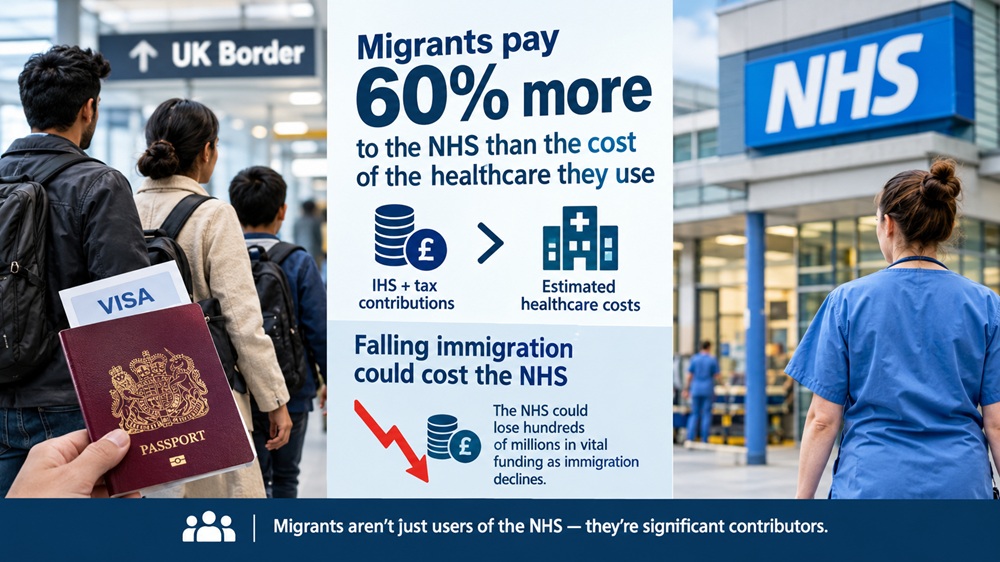
LONDON Oct 21: The NHS could lose hundreds of millions of pounds in vital funding as immigration falls, with new analysis revealing that migrants paying the Immigration Health Surcharge contribute significantly more to the health service than the cost of the care they receive.
The NHS risks losing a major source of funding as immigration numbers decline, according to new analysis by the Nuffield Trust, which finds that migrants paying the Immigration Health Surcharge (IHS) contributed at least 60% more to the health service in 2023/24 than the estimated cost of their healthcare. The findings challenge the widespread perception that migrants place an additional financial burden on the NHS. Instead, the analysis suggests that many visa holders are making a substantial net contribution to the health service through the surcharge and their normal tax payments.
The warning comes as immigration falls and political parties pledge further restrictions, raising concerns that changes to visa rules could leave the NHS with a significant funding shortfall.
Immigration surcharge has become a major source of NHS funding
The Immigration Health Surcharge, paid by most people applying for visas lasting more than six months, was originally introduced at £200 a year as a contribution towards healthcare costs. It has since risen by 400% to £1,035 annually, with a reduced rate of £776 for students and child dependants. According to the Nuffield Trust, the increase has transformed the surcharge into a substantial source of income for the health service.
Revenue from the IHS rose from between £150 million and £250 million annually between 2015 and 2018 to almost £2.5 billion in 2024/25. Over the same decade, its contribution to the NHS budget increased from 0.1% to more than 1%.
However, income has already started to fall alongside declining immigration. Revenue dropped by more than £100 million to £2.3 billion in the year to 2025/26. The analysis warns that further reductions in immigration could put this funding at risk, potentially depriving the NHS of hundreds of millions of pounds or more.
Migrants often pay far more than the cost of their care
The Nuffield Trust’s analysis compares the surcharge and direct tax contributions made by different groups of visa holders with the Department of Health and Social Care’s estimate that the average annual healthcare cost for someone paying the IHS was £1,036.
Using data for 2023/24, the researchers found that the overall group contributed at least 60% more towards the NHS budget than the estimated cost of their healthcare.
The difference was particularly striking for some workers. A skilled worker earning £55,000 a year, without dependants, may have contributed 511% more than the estimated cost of their NHS care.
A skilled worker earning the same salary and bringing a family of four may have contributed 125% more than the estimated healthcare costs for the household. Someone on a post-study work visa may have contributed 120% more than their estimated care costs.
The picture is not the same for every visa category. The analysis found that an international student may have contributed 25% less than the estimated cost of their healthcare.
Nevertheless, the overall findings indicate that migrants who pay the surcharge make a significant net contribution to NHS finances.
The researchers also questioned the strength of the evidence used to calculate average healthcare costs for surcharge payers, suggesting that the current fee may be set higher than necessary.
Falling immigration could deepen NHS financial pressures
The growing reliance on IHS income creates a problem for a health service already facing considerable financial pressures.
As immigration declines, fewer new visa applications could mean less money flowing into the surcharge system. The Nuffield Trust warns that further falls could have serious consequences if the NHS continues to depend on these payments to support its budget.
Nuffield Trust Fellow Stelios Vassiliou said the surcharge had become too significant a source of income to overlook.
“If the level of income from the charge was to fall back to that seen at its inception in 2015/16, the NHS would be left facing a shortfall in the billions,” he said.
He added that the findings should prompt politicians to consider the unintended consequences of changes to immigration and visa policies.
The financial impact is only one part of the relationship between immigration and the NHS. Around a fifth of the NHS workforce comes from overseas, meaning restrictions on migration could also affect the availability of doctors, nurses and other healthcare professionals.
The combination of potentially reduced staffing and declining surcharge revenue could place additional pressure on an already stretched service.
Questions over the purpose of the surcharge
The analysis also highlights a problem with how the surcharge is collected and distributed. Migrants generally pay the fee upfront for the full duration of their visa, often three years. The money is then transferred to the NHS and spent in the first year, rather than being spread across the period it is intended to cover.
This arrangement makes NHS income dependent on the number and timing of visa applications, creating uncertainty when immigration levels change.
Vassiliou said the government needed to clarify the purpose of the policy, including whether it was intended to ensure migrants paid their fair share, increase NHS funding or discourage immigration.
The findings raise a broader question for policymakers: whether reducing immigration will deliver the intended benefits if it also removes a significant source of funding from public services.
With IHS revenue having grown to almost £2.5 billion a year at its peak, any substantial decline could have consequences well beyond immigration policy itself.
The Nuffield Trust’s analysis suggests that migrants paying the surcharge are not simply users of the NHS but also important contributors to its finances. As immigration falls, the government will need to consider how that lost income could be replaced without adding to the financial pressures facing the health service.