






- October 25, 2026
HMRC to take money directly from bank accounts of tax dodgers under proposed new powers: Report
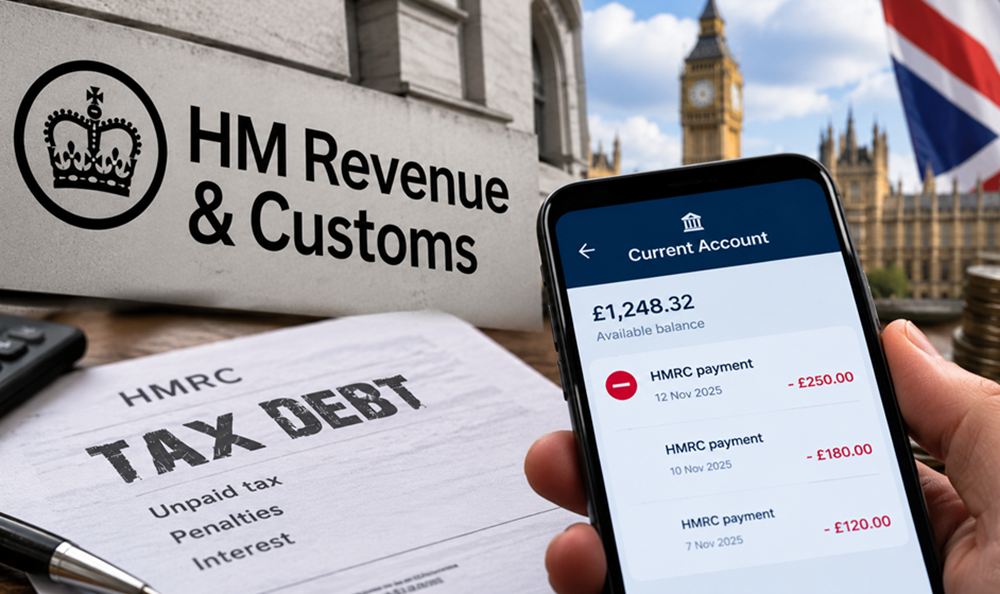
LONDON Oct 25: The UK government is reportedly planning to give HM Revenue & Customs (HMRC) stronger powers to recover unpaid tax directly from people’s current and savings accounts, including smaller debts owed by persistent tax avoiders. According to The Times, the proposals are expected to be announced by Chancellor John Healey in the Autumn Budget, as the government seeks to tackle Britain’s estimated £60 billion tax debt.
HMRC estimates that around 4.8 million individuals and businesses owe less than £10,000 each, with the combined outstanding debt totalling approximately £4 billion. Individual taxpayers owe an average of around £950.
HMRC could target smaller tax debts
Under the existing rules, HMRC can recover qualifying tax debts of £1,000 or more directly from bank and building society accounts, provided the necessary conditions are met. These include ensuring that at least £5,000 remains across the debtor’s accounts after the money is recovered. The direct recovery powers were introduced in 2015, suspended during the pandemic and subsequently reinstated.
However, The Times reports that the government is considering lowering the threshold, potentially allowing HMRC to pursue debts worth only a few pounds in certain cases involving taxpayers who repeatedly fail to pay what they owe.
The proposed deductions could also cover related penalties and interest, although the precise scope of any new powers would depend on the final measures announced.
Concerns over access to bank accounts
The reported plans have prompted concerns about how the expanded powers could affect people who are struggling financially. Andrew Griffith, the shadow chancellor, criticised the proposal, describing it as “absurd”. He warned that the measures could allow HMRC to take money over relatively small debts and leave people unable to meet essential expenses, including rent.
The Association of Taxation Technicians (ATT) also warned that HMRC should not introduce the new powers without assurances that appropriate safeguards are in place and that the correct taxpayers are targeted.
What happens if a bank account is overdrawn?
HMRC’s existing direct recovery powers do not normally allow it to take money from a negative bank balance. An overdrawn account is different from an account containing available funds, and the existing rules require HMRC to meet specific conditions before recovering money directly.
If the proposals are introduced, their precise effect on people with low balances, overdrafts or financial hardship will depend on the final rules and safeguards. The reported plans should not be taken to mean that HMRC can automatically empty any bank account.
HMRC steps up efforts to recover unpaid tax
The reported proposals come as the National Audit Office (NAO) has highlighted growing challenges for HMRC in dealing with people who owe tax but do not engage with the department. Since 2021, HMRC has introduced several measures to improve debt recovery, including recruiting additional staff, increasing its use of private-sector debt collection agencies and using data to tailor its approach to different debtors. HMRC estimates that these measures generated £10.7 billion in additional revenue by the end of the 2025–26 financial year, against expenditure of £368 million.
Online retailers could face tougher tax rules
The Chancellor’s Budget is also reportedly expected to include measures targeting online marketplaces, including Amazon, eBay and Temu. The proposals could make major online platforms responsible for collecting tax owed by retailers selling through their services, with a particular focus on overseas sellers accused of exploiting existing rules to avoid VAT.
The measures are reportedly intended to raise up to £1 billion, with the money potentially used to reduce business rates for high-street shops. There has also been speculation about possible increases in taxes on banks. The Trades Union Congress (TUC) has called for a windfall tax on banks, arguing that their substantial profits and bonus payments could help fund reductions in household energy bills through a social tariff.
The Treasury told The Independent that decisions on taxation would be set out by the Chancellor at fiscal events, rather than through routine comments on speculation or proposals. The proposals have not been confirmed by the information reported here. The final details, including the debts that could be targeted and the protections available to account holders, will depend on the measures formally announced by the government.