






- November 28, 2026
UK work and student visa arrivals plunge as net migration falls to lowest level since 1997
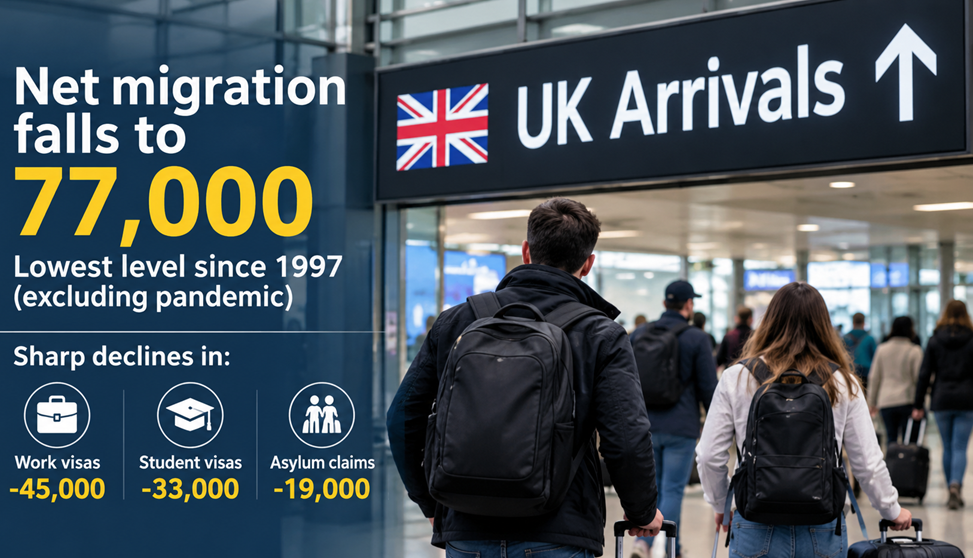
LONDON Nov 28: Net migration to the UK has fallen to 77,000 in the year to June, its lowest level since 1997 outside the Covid-19 pandemic, as arrivals on work and student visas fell sharply, according to figures from the Office for National Statistics (ONS).
The figures show a dramatic reversal in migration trends, with net migration down 92% from its record peak of 944,000 in the year to March 2023. The decline has been driven largely by fewer people arriving from outside Europe for employment and education, alongside a reduction in asylum arrivals.
The number of people coming to the UK to work fell by 45,000, while student arrivals declined by 33,000. Asylum-related arrivals also fell by 19,000, reflecting tighter immigration rules introduced under the previous Conservative government and continued by Labour after it took office in July 2024. The ONS estimates that 738,000 people immigrated to the UK in the year to June, while 661,000 emigrated, leaving net migration at 77,000.
Prime Minister Andy Burnham said the figures demonstrated that the government had achieved a “sufficient degree of control” over the immigration system, while acknowledging that further work remained.
“I’m not going to say all of the work is done, and I don’t want to appear complacent, but I think we’re finally as a country getting into the position that the public has long wanted to see,” he said.
Work and student migration fall sharply
The reduction in work and student arrivals represents a significant change from the migration surge experienced in the aftermath of Brexit. Following the UK’s departure from the European Union, Boris Johnson’s government introduced a new immigration system that enabled greater numbers of people from outside the EU to come to the UK for work and study. The expansion contributed to record migration levels, widely referred to as the “Boriswave”.
The subsequent tightening of visa rules under Rishi Sunak and further restrictions introduced by Labour have helped reverse that trend.
The decline in work-related arrivals and student migration has become one of the principal drivers behind the latest reduction in net migration, with the government arguing that changes to immigration policy are beginning to deliver results.
Home Secretary Shabana Mahmood said Labour had reduced net migration by 92% from its peak under the Conservatives.
“We have brought net migration to 77,000, down 92% from its peak under the Conservatives,” she said. “Where they failed, we have delivered for the British people.”
Asylum arrivals and waiting lists also decline
The number of people arriving in the UK seeking asylum fell to 73,000 in the year to June, compared with 93,000 in the previous year. The Home Office attributed the decline to faster processing of asylum cases and fewer arrivals through irregular routes, particularly small boat crossings across the English Channel. By September, the number of people waiting for an asylum decision had fallen to approximately 41,000, a 49% reduction compared with the previous year.
The number of people accommodated by the Home Office also declined to 93,000 in September, down 16% year-on-year. The government said 52 asylum hotels had been emptied during the year, while the number of people accommodated in hotels fell by 64% to approximately 13,000.
Political debate over the reasons behind the decline
The figures have prompted competing claims from political parties over the effectiveness of immigration policy. Conservative shadow home secretary Chris Philp argued that the reductions were largely the result of visa restrictions introduced by his party before the 2024 general election. He called for an annual, legally binding migration cap set by Parliament.
Reform UK home affairs spokesman Zia Yusuf said the figures were no cause for celebration, arguing that population growth had contributed to pressures on housing, healthcare and prisons.
Liberal Democrat asylum and immigration spokesman Paul Kohler said the country needed a comprehensive immigration strategy to address demographic and economic challenges while supporting public services. The Green Party criticised the government’s approach, arguing that creating a harsh environment for migrants and asylum seekers should not be considered a measure of success.
Migration could fall further
Dr Ben Brindle of Oxford University’s Migration Observatory said the UK was entering an unusual period in which immigration had fallen while emigration remained relatively high. He said many of those leaving the country were non-citizens who had arrived during the period of high migration in recent years, potentially pushing net migration figures lower still in the coming year.
However, he cautioned that the decline may not be permanent. The latest figures highlight the impact of tighter immigration rules, particularly on work and student visas, as the UK moves away from the record migration levels experienced in 2022 and 2023. While the government has welcomed the decline as evidence of greater control, debate over the long-term economic and social consequences of lower migration continues.