






- October 4, 2026
KCWA’s Five-Year Kalamela Streak Celebrates the Strength of Croydon’s Malayalee Community
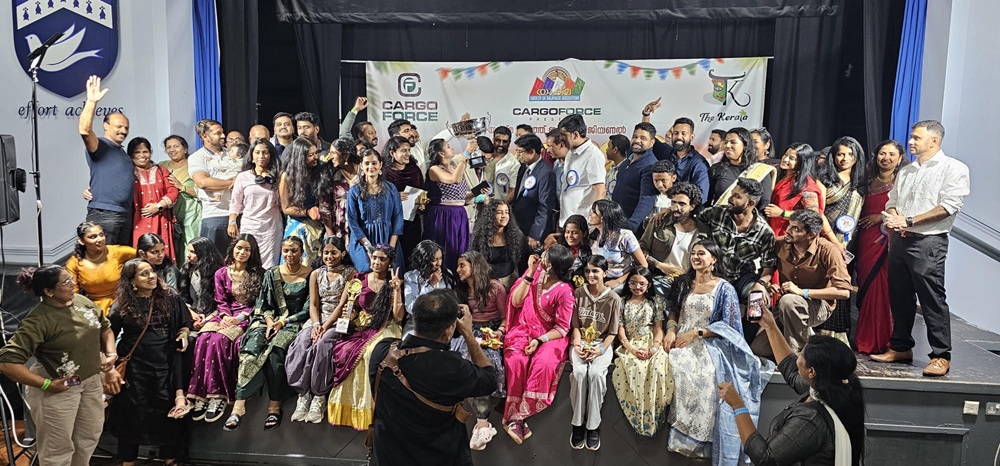
LONDON, Oct. 4 : For the Malayalee community in Croydon, the latest success of the KCWA at the UUKMA Kalamela – Southeast Region is more than another championship trophy. It is a celebration of community spirit, youth talent, cultural commitment and years of collective effort.
By securing the Southeast Region Kalamela championship for the fifth consecutive year, KCWA has established one of the most notable runs of sustained success in the UK Malayalee cultural community. The achievement reflects not only the talent of its performers, but also the dedication of parents, teachers, volunteers, organisers and supporters who work behind the scenes throughout the year.
Five consecutive championships do not happen by chance. They are built through preparation, discipline, teamwork and a long-term commitment to giving young people an environment in which their artistic abilities can flourish.
A Championship Built on Community
KCWA’s Kalamela journey has become a source of considerable pride for the Malayalee community in Croydon and surrounding areas. The organisation’s success demonstrates how community associations can become important centres for preserving culture while also providing opportunities for the younger generation to develop confidence, creativity and leadership.
From dance and music to traditional arts, literary activities and visual arts, KCWA participants have continued to make their presence felt across the competition.
Behind every performance is a network of families and volunteers. Children attend regular classes and rehearsals, while parents commit their time to transport, costumes, preparation and event coordination. Teachers and mentors devote countless hours to training performers, refining routines and preparing teams for competition.
That collective effort is an important part of the story behind KCWA’s five-year championship streak.
Five Years of Sustained Excellence
Winning a cultural competition once is an achievement. Maintaining that level of performance year after year requires something much deeper: a system capable of identifying talent, developing performers and maintaining enthusiasm across generations.
KCWA’s five consecutive championships point to a strong culture of preparation and artistic discipline.
Its performers have competed successfully across a broad range of categories, with group performances playing an important role in the association’s overall success. These presentations often bring together traditional Kerala artistic forms and contemporary choreography, allowing young performers to connect with their heritage while expressing themselves in a modern setting.
Individual achievements have also contributed significantly to KCWA’s overall championship performances, demonstrating the depth of talent within the association.
Nurturing the Next Generation
Perhaps the most significant aspect of KCWA’s success is its impact on children and young people.
For many families, cultural programmes provide more than an extracurricular activity. They offer children an opportunity to learn about Kerala’s traditions, language, music, dance and artistic heritage while building friendships within the wider Malayalee community.
Regular training and structured practice can also teach lessons that extend beyond the stage — discipline, punctuality, teamwork, perseverance and confidence.
The achievements of KCWA’s performers provide younger children with visible examples of what dedication can achieve. Seeing peers and older participants succeed can encourage a new generation to take part, creating a cycle in which achievement inspires participation and participation creates future talent.
A Collective Effort Across Generations
One of the defining features of KCWA’s Kalamela success is the involvement of multiple generations.
Young performers may be the ones under the spotlight, but their achievements are supported by an extensive community network. Parents, instructors, volunteers and organisers all play different roles in preparing teams for competition.
From rehearsals and costumes to music, choreography, logistics and event-day coordination, the process requires cooperation at every level.
This intergenerational participation strengthens the wider community itself. Children develop their talents, parents become involved in community life, teachers share their expertise, and volunteers help create opportunities for others.
The result is a cultural ecosystem in which success belongs not just to individual performers, but to the community that supports them.
Celebrating Individual Achievement
The latest Kalamela success also brought recognition to individual performers.
Nivedya Sunil was named Juniors Champion, while Abhinav Shaji claimed the Seniors Champion title.
Abhinav Shaji also received the prestigious Kalaprathibha recognition, further highlighting his individual achievement at the Kalamela.
Such awards add another dimension to KCWA’s overall success. While group performances demonstrate collective strength, individual honours showcase the commitment and artistic ability of performers who have invested significant time and effort in developing their skills.
For younger members of the community, these achievements can serve as powerful encouragement to pursue their own interests in the arts.
Preserving Culture in a New Generation
For Malayalee communities across the UK, cultural organisations have an important role in ensuring that traditions remain meaningful for children growing up far from Kerala.
Events such as Kalamela provide a platform where that heritage can be experienced rather than simply discussed.
Traditional dance, music and artistic forms become part of children’s lived experiences. They learn not only the techniques associated with an art form but also the cultural stories, values and traditions connected to it.
KCWA’s continued participation and success therefore represents more than competitive achievement. It demonstrates how community organisations can help bridge generations — allowing parents and grandparents to pass elements of their cultural heritage to children in a way that is engaging, creative and relevant to their lives in Britain.
Inspiring Wider Community Participation
The impact of repeated success can extend well beyond the competition itself.
KCWA’s Kalamela achievements have helped raise the profile of its cultural programmes and provide encouragement for families to become more actively involved in community activities.
For some children, a championship performance may be the moment that inspires them to begin learning dance or music. For parents, it can provide an opportunity to connect with other families and become part of the community network.
In this way, a trophy on the competition stage can have a much wider effect — encouraging participation, strengthening relationships and creating new opportunities for the next generation.
More Than Five Trophies
The significance of five consecutive championships ultimately lies not in the number of trophies alone, but in what those trophies represent.
They represent hundreds of hours of rehearsal, countless journeys to classes and competitions, the dedication of teachers, the support of parents and volunteers, and the enthusiasm of children who continue to embrace their cultural heritage.
They also represent continuity.
A championship won today becomes part of the history that tomorrow’s performers inherit. The children currently watching from the audience may become the performers, mentors and volunteers of the future.
That is how a competition record can gradually become a cultural legacy.
A Legacy Still Being Written
KCWA’s five-year Kalamela championship streak has become an important chapter in the story of Croydon’s Malayalee community. Its significance extends beyond competition results to the broader values of participation, cultural preservation, youth development and community solidarity.
The achievements of Nivedya Sunil, Abhinav Shaji and their fellow performers provide individual moments of celebration. The five consecutive championships provide a remarkable collective milestone.
But perhaps the most enduring achievement is the community that has grown around the performances — families coming together, children discovering their talents, teachers sharing their knowledge and generations working together to keep Kerala’s cultural traditions vibrant in the UK.
For KCWA, the latest championship may be another addition to an impressive record. For the wider Croydon Malayalee community, it is a reminder of what can be achieved when talent is supported by organisation, tradition is strengthened through participation, and an entire community works together.
The trophies may mark the victories. The real legacy is the generation being inspired to carry the culture forward.