






- December 23, 2025
Sponsoring overseas workers cost more for UK employers from Dec 16
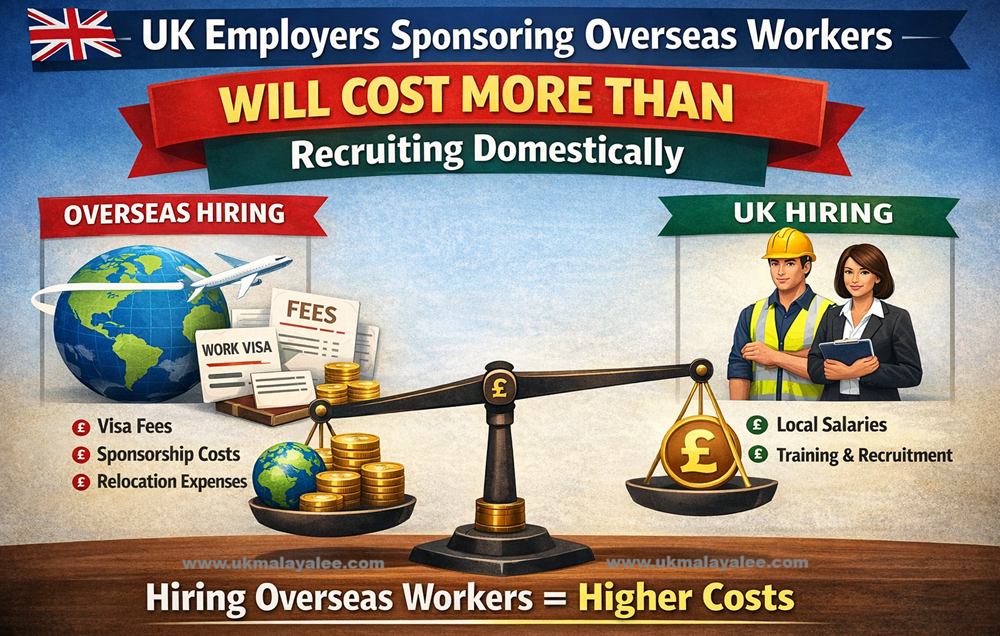
LONDON Dec 23: UK employers who sponsor overseas workers typically incur higher costs than those recruiting from the domestic labour market. These costs arise from mandatory visa-related fees—such as the Immigration Skills Charge (ISC)—as well as higher salary thresholds (now often £38,700+ or the median “going rate”), and additional expenses including sponsor licence fees, administration costs, and the Immigration Health Surcharge. Collectively, these measures make overseas recruitment significantly more expensive, reflecting policy objectives to prioritise UK workers and increase public revenue.
This change has been anticipated for months, but it is now in force—and for many businesses, the financial impact will be felt immediately.
On 16 December 2025, the UK’s Immigration Skills Charge increased by 32%. The new rates are £1,320 per year for large sponsors and £480 per year for small or charitable sponsors. These charges apply when assigning a Certificate of Sponsorship (CoS) for Skilled Worker and Global Business Mobility visas.
What has changed?
From 16 December 2025, the Immigration Skills Charge rose by approximately 32%, marking the first increase since the charge was introduced in 2017.
The updated rates are:
£1,320 per sponsored worker per year for medium and large sponsors (up from £1,000)
£480 per sponsored worker per year for small businesses and charities (up from £364)
For longer sponsorship periods, the increase is substantial. A five-year Skilled Worker visa now attracts an ISC of £6,600 for a medium or large employer—£1,600 more than previously. Importantly, this charge must be paid upfront at the point the Certificate of Sponsorship is assigned.
Why this increase matters
This is not simply a technical adjustment or an inflation-linked rise. The Immigration Skills Charge is an intentional policy lever. By increasing it, the government is reinforcing a clear message: employing overseas workers should be more expensive, and employers should invest more in training and developing the UK workforce.
The ISC increase sits alongside broader immigration reforms, including higher salary thresholds, stricter compliance requirements, and an ongoing drive to reduce reliance on overseas labour. For employers already facing acute skills shortages, this creates a challenging trade-off.
The real impact on employers
1. Sponsorship is now a more significant budget decision
For organisations sponsoring multiple workers—particularly in sectors such as technology, care, engineering, construction, and hospitality—the additional cost is material. Immigration budgets that were workable last year may no longer be viable in 2026.
2. Timing is now critical
Any Certificates of Sponsorship assigned from 16 December 2025 onward are subject to the higher rate. Employers who were unable to assign CoS before this date may already be experiencing increased costs.
3. SMEs and charities are disproportionately affected
While discounted rates still apply to small businesses and charities, the proportional increase is the same. For organisations operating on tight margins, this may determine whether sponsorship remains feasible at all.
4. Costs cannot be passed on to the worker
This is a key compliance issue. The Immigration Skills Charge must be paid by the employer. Passing this cost on to the sponsored worker is prohibited and could place a sponsor licence at serious risk.
What employers should be doing now
With the increase already in effect, attention should shift from preparation to mitigation and strategy:
Review upcoming visa extensions and factor in the higher ISC costs
Reforecast recruitment and immigration budgets for 2026
Audit sponsor licence usage to confirm that each sponsored role is genuinely necessary
Carefully assess any potential exemptions, without assuming they apply
Seek professional advice before making changes that could affect compliance
Errors around sponsorship costs, timing, and compliance are costly—and enforcement is becoming increasingly strict.
Final Summary
The Immigration Skills Charge increase is now a reality, not a proposal. For UK employers, it reinforces an increasingly clear reality: sponsoring overseas workers is becoming more expensive, more complex, and more closely scrutinised. Organisations that adapt early—through smarter workforce planning and robust, compliant immigration strategies—will be far better positioned to compete for talent in 2026 and beyond.