






- February 2, 2026
ILR Debate: Minister hints earned settlement model to proceed and will apply to existing migrants without ILR
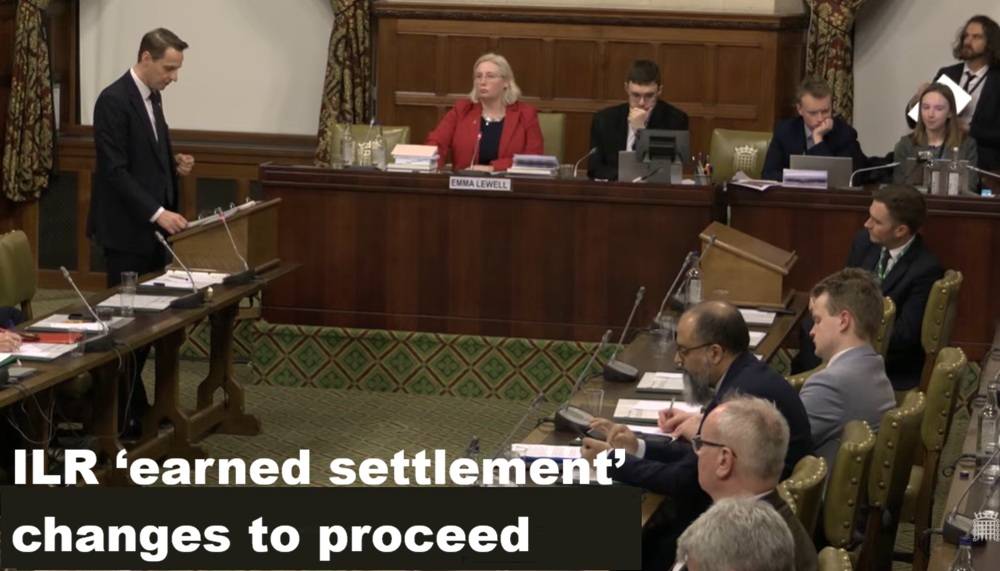
LONDON Feb 2: A Westminster Hall debate in the House of Commons yesterday examined the Government’s plans for an “earned settlement” model and broader reform of indefinite leave to remain (ILR), including proposals to extend the standard qualifying period from five to ten years. Under the proposals, the changes could apply not only to future applicants but also to migrants already in the UK who have yet to secure ILR.
The debate followed two petitions that each exceeded 100,000 signatures. A petition calling to keep the five-year ILR route while restricting access to benefits for new ILR holders has attracted more than 234,000 signatures, while an earlier petition opposing the proposed ten-year route closed with over 106,000.
Opening the debate, Labour MP Tony Vaughan warned that applying the changes retrospectively would “move the goalposts” for migrants who entered the UK on the expectation of a five-year pathway to settlement. He argued that altering the rules mid-way would amount to a breach of trust, undermine fairness, and damage sectors already facing labour shortages.
Vaughan told MPs that the Government was considering doubling the wait for settlement to ten years, and potentially up to 15 years for care workers. He criticised the proposal to apply the changes to those already in the UK, saying migrants had come under a clear understanding: work in needed sectors, obey the law, pay taxes, and earn the right to stay. Changing those terms after people had built lives in the UK, he said, would make Britain appear unpredictable and undermine the principle of fair play.
Speakers from across the House echoed these concerns during the three-hour debate. As Vaughan noted, every backbencher who spoke opposed retrospective reform. MPs highlighted the uncertainty and anxiety the proposals had caused for individuals and families already settled in their constituencies.
Labour MP Barry Gardiner focused on the financial implications, warning that retrospectivity and vague or subjective criteria “destroy clarity and certainty.” He cited a family in his constituency that had already paid £28,726 in visa fees and charges under the current rules, and which could face costs exceeding £43,000 if required to remain on an extended route to settlement, with no assurance that the rules would not change again.
Responding for the Government, the Minister for Migration and Citizenship, Mike Tapp, said the Government intends to move ahead with the earned settlement model and will not maintain the status quo given the number of people expected to seek settlement. However, he stressed that key aspects of the reform—including transitional arrangements for those already part-way to settlement—remain subject to the public consultation launched in November and due to close this month.
Addressing MPs’ concerns, Tapp said the consultation specifically sought views on whether and how the proposals should apply to those already on a route to settlement. While acknowledging the strength of feeling in Parliament and among affected individuals, he said he could not pre-empt the outcome of the consultation, which will be published after it closes.
Key extracts from Minister for Migration and Citizenship, Mike Tapp’s speech (edited)
Both petitions relate to the Government’s earned settlement proposals set out in A Fairer Pathway to Settlement, the Command Paper introduced by the Home Secretary on 20 November. These proposals represent the most significant reform of the settlement system in decades and are currently subject to a public consultation, which closes in 10 days on 12 February. We recognise the strength of feeling among Members, their constituents and migrants across the country, and we are listening carefully to those views.
Some of the rule changes are settled and will proceed, while other elements—most notably transitional arrangements—remain under consultation. Those views will be taken into account. While the consultation is ongoing, I am limited in what I can say, but I will be as open as possible.
The Government values the long-term contribution migrants make to the UK. This is not a deportation policy, and multiculturalism is one of our strengths. However, settlement is a privilege, not an automatic right. It should be based not simply on time spent in the UK, but on contribution, integration, respect for the law and learning English. These principles underpin a system the public can have confidence in.
Net migration rose sharply under the previous Government. Between 2026 and 2030, an estimated 2.2 million people could become eligible for settlement. Around one in every 30 people in the UK arrived between 2021 and 2024. These figures place significant pressure on public services, housing and community cohesion. Doing nothing is not an option, which is why we have set out plans to increase the standard qualifying period for settlement from five to ten years.
Under the earned settlement model, migrants will be able to reduce the time required through positive contributions, such as working in public service roles or volunteering. This approach recognises and rewards the contributions many migrants already make.
Concerns have been raised about stability and “moving the goalposts”. It is important to stress that people on a route to settlement retain access to work, education, healthcare, housing, financial products and the ability to travel. This reform is not about removing those rights, but about ensuring settlement is based on contribution and compliance with the law.
The new system will also include penalties for those who claim public funds prematurely or breach immigration laws. These measures are intended as deterrents, not punishment, and reflect public expectations of a fair system.
There will be five-year discounts outside the consultation for two groups. The first covers partners, parents and children of British citizens, reflecting our commitment to family life. The second applies to British National (Overseas) visa holders, reaffirming our commitment to the people of Hong Kong. More complex issues around income and assets remain under consultation.
Integration remains central to the reforms. Higher English language requirements and strict adherence to the law are designed to strengthen communities and ensure migration benefits local areas as well as the economy.
Turning to the first petition, while migrant workers make a vital contribution, some sectors have become overly reliant on overseas recruitment and failed to invest in domestic skills. The immigration reforms set out last year aim to rebalance this. We have already raised the skills threshold, reduced eligible occupations, increased the immigration skills charge, and are reviewing salary requirements and shortage occupation lists.
The issue of transitional arrangements—whether the new rules will apply to those already part-way to settlement—has been a central concern. We have explicitly sought views on this in the consultation and cannot pre-empt its outcome. Issues raised around family income, the gender pay gap, disability, student debt and armed forces concessions are all being considered.
In relation to the second petition, we are also consulting on whether access to benefits should be restricted to British citizens rather than those with settled status. Given the severe pressures on social housing and public finances, it is right to reassess when access to public funds should begin.
I encourage anyone affected by these proposals to respond to the consultation before it closes on 12 February. These are significant reforms, and we want decisions to be based on strong evidence and a full understanding of their impact. We recognise the importance of this task and are committed to proceeding with the care and seriousness that Parliament and the public expect. (Click To Read Full Speech)